
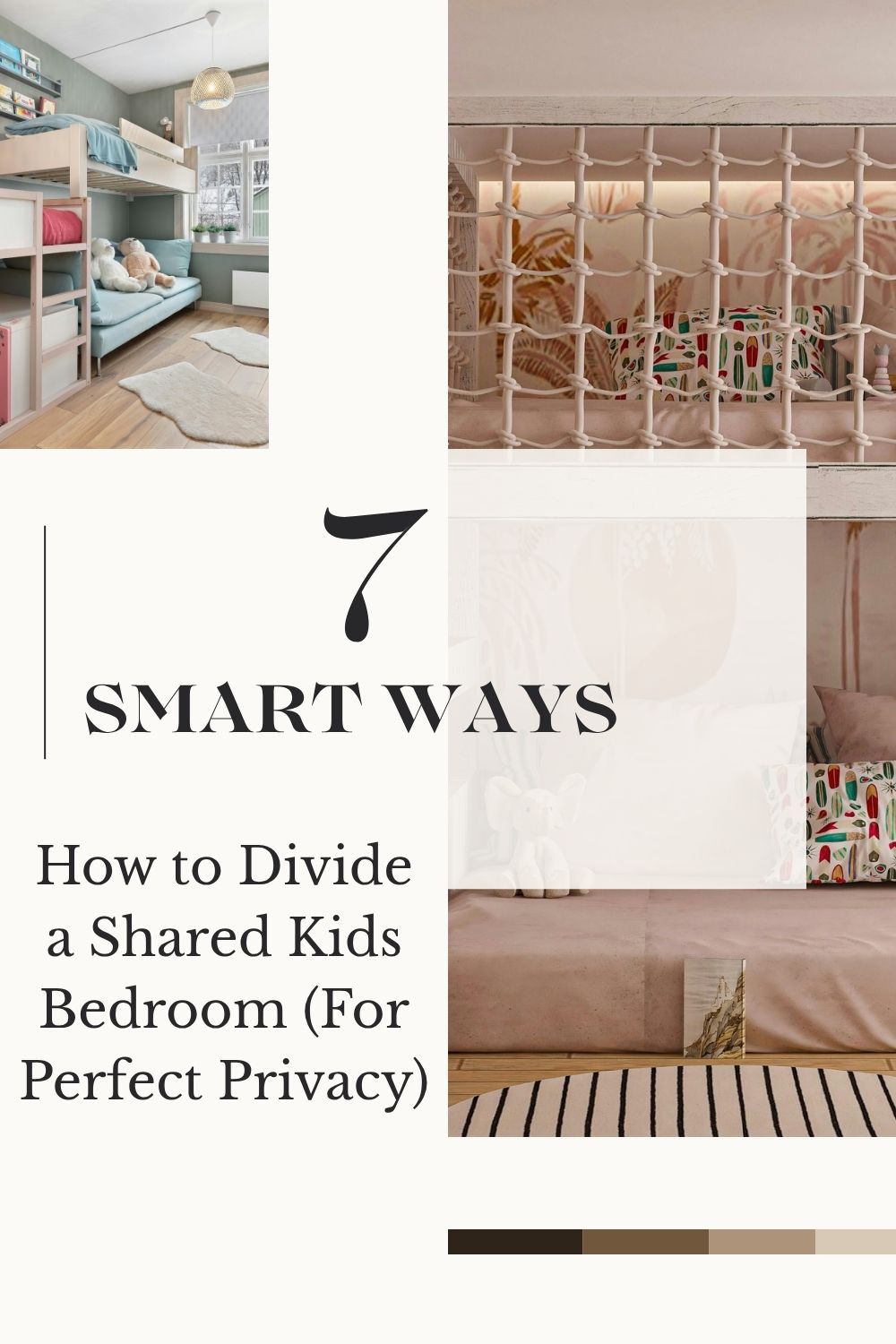
Designing a shared kids bedroom is always a careful balance between comfort, individuality, and calm structure, especially when privacy becomes just as important as play space. In my styling workflow at Roomphi, I often approach this challenge by first understanding how each child uses their corner of the room throughout the day. The focus for this guide, “7 Smart Ways How to Divide a Shared Kids Bedroom (For Perfect Privacy),” is to show thoughtful, real-world solutions that feel natural rather than forced.
When working with shared kids bedroom layouts, I pay close attention to movement flow, lighting, and how each child can feel a sense of personal space without making the room feel closed off. Even in smaller rooms, subtle separation techniques can completely change how peaceful and organized the environment feels. These ideas are designed to support both functionality and warmth, so the space grows with the children rather than limiting them.
Over time, I’ve learned that the best room divisions are not always the most obvious ones, but the ones that quietly create comfort and independence. Whether you’re styling for siblings close in age or very different stages, the right approach can bring balance without losing connection between them. This post brings together 7 smart ways to divide a shared kids bedroom so you can design a space that feels fair, personal, and beautifully intentional.
1. Add Privacy Curtains for a Functional Shared Sibling Room
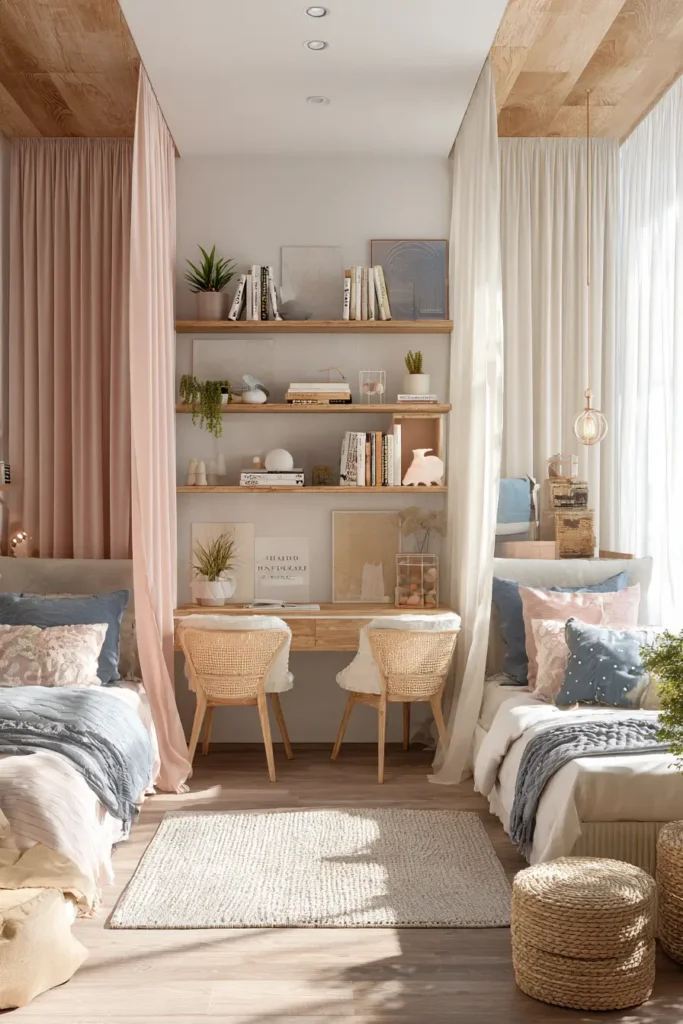
In a shared sibling room, privacy can feel like a rare luxury—but privacy curtains offer a simple, stylish way to bring balance back into the space. Soft fabric dividers create gentle boundaries between sleeping or study zones without making the room feel closed off or heavy. The result is a shared environment that still feels personal, calm, and thoughtfully organized.
These curtains can be styled in so many ways, from airy neutrals that keep the room light to textured fabrics that add warmth and character. Hung from ceiling tracks or minimalist rods, they glide effortlessly to shift the mood of the room whenever needed. It’s a flexible design choice that grows with the children and adapts to changing routines.
What makes this idea so appealing is how it blends practicality with comfort in everyday living. Siblings gain their own quiet corners for reading, resting, or unwinding while still sharing a connected, harmonious space. If you’re exploring smarter ways to structure a shared room, this styling detail can completely reshape how the space feels without major renovation.
2. Bunk Beds With A Modern Twist: Space-Saving & Stylish
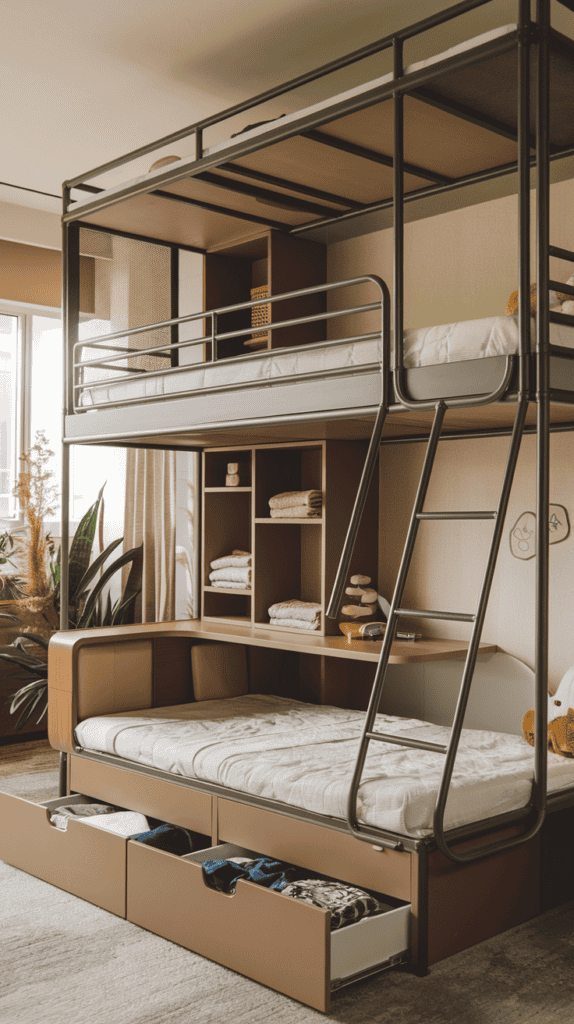
Bunk beds are no longer just practical sleep solutions—they’ve become sculptural centerpieces for thoughtfully designed rooms. With a modern twist, they bring clean architectural lines, clever vertical use of space, and a fresh sense of order to even the smallest bedrooms.
Today’s designs go far beyond stacked frames, introducing integrated storage drawers, floating shelves, and built-in staircases that double as hidden compartments. Materials like warm wood, matte metals, and soft neutral palettes create a calm, design-led atmosphere. Subtle lighting details and refined railings add both safety and a polished finishing touch.
Perfect for shared kids’ rooms or compact apartments, these bunk bed ideas create breathing room without sacrificing personality or comfort. They encourage smarter organization while keeping the space visually light and inviting, making every corner feel intentional and well-considered.
3. Smart Tech Integrations for Lighting and Storage in a Small Bedroom for Two Kids
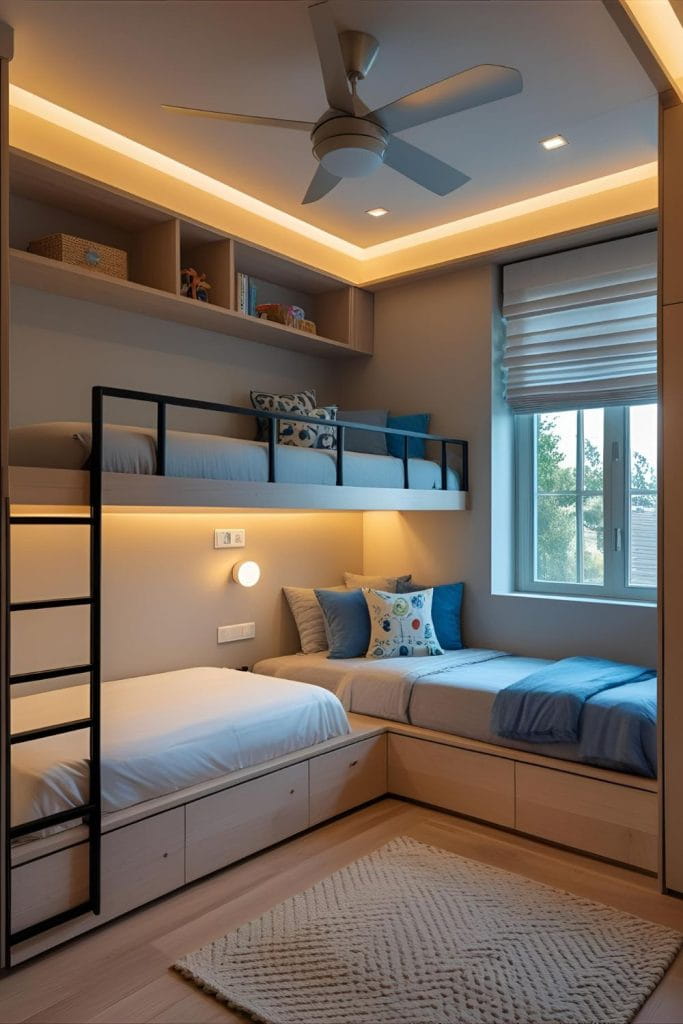
A shared bedroom for two kids can feel tight fast, but smart design choices change everything from the very first glance. This setup focuses on intelligent lighting systems and space-saving storage that quietly adapts to daily routines, late-night reading, and early-morning rushes. It’s about creating a room that feels organized, calm, and effortlessly responsive without losing warmth or personality.
Soft integrated lighting becomes more than just illumination here—it shapes the entire mood of the space. Think adjustable bedside glow, motion-sensor night paths, and layered lighting that helps each child enjoy their own corner without disturbance. Paired with built-in storage that hides clutter inside sleek panels, drawers, and vertical units, the room stays visually clean even on the busiest days.
What makes this concept especially compelling is how naturally technology supports real family life. Every element is designed to reduce friction, from smart-controlled brightness to storage zones that keep toys, books, and essentials exactly where they belong. The result is a shared bedroom that feels calm, organized, and thoughtfully structured for two growing personalities.
4. Loft Bed Privacy Pods
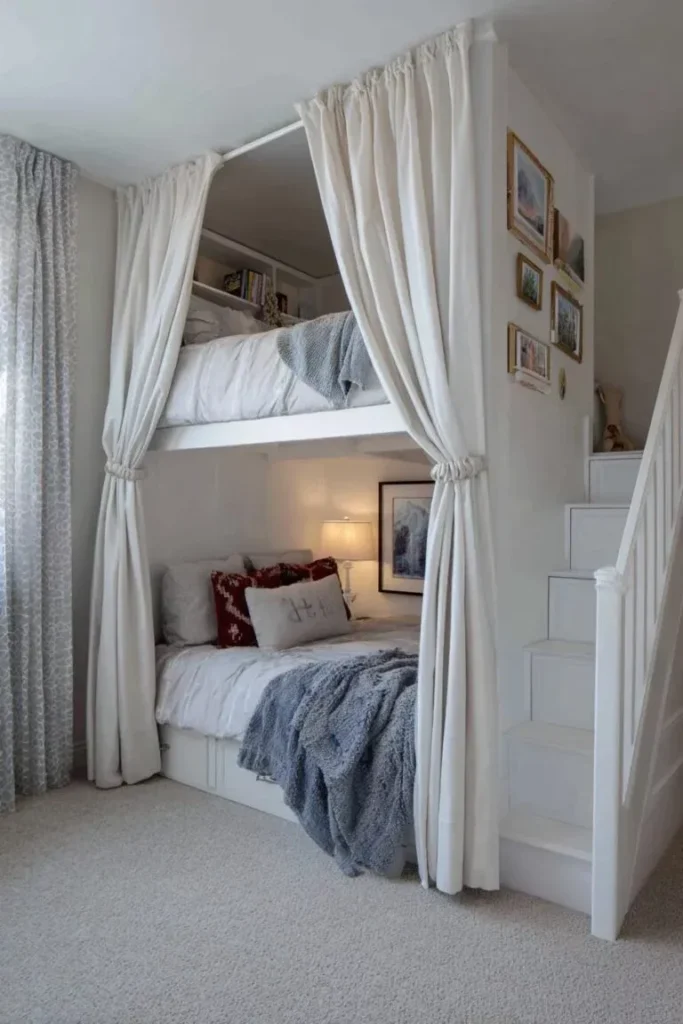
Loft Bed Privacy Pods reimagine shared sleeping spaces with a clever balance of comfort and personal space. Picture elevated sleeping zones wrapped in soft partitions, fabric panels, or built-in wood framing that gently defines each pod without closing off the room. The result feels structured yet open, giving every user a quiet corner to unwind.
Each pod becomes its own styled micro-room, often paired with integrated lighting, small shelving, and cozy textiles that make the loft bed feel intentional rather than purely functional. The design works especially well in shared kids’ rooms, studio apartments, or compact dorm setups where privacy is limited but still deeply needed. Even in tight layouts, these pods create a sense of ownership and calm.
What makes this concept so compelling is how easily it adapts to different aesthetics, from warm Scandinavian wood tones to bold, playful color-blocked frames. Curtains, sliding panels, or slatted dividers can shift the mood instantly while keeping the structure practical and visually light. It’s a smart way to bring order, personality, and quiet comfort into one unified sleeping arrangement.
5. Using a Curtain as a Room Divider
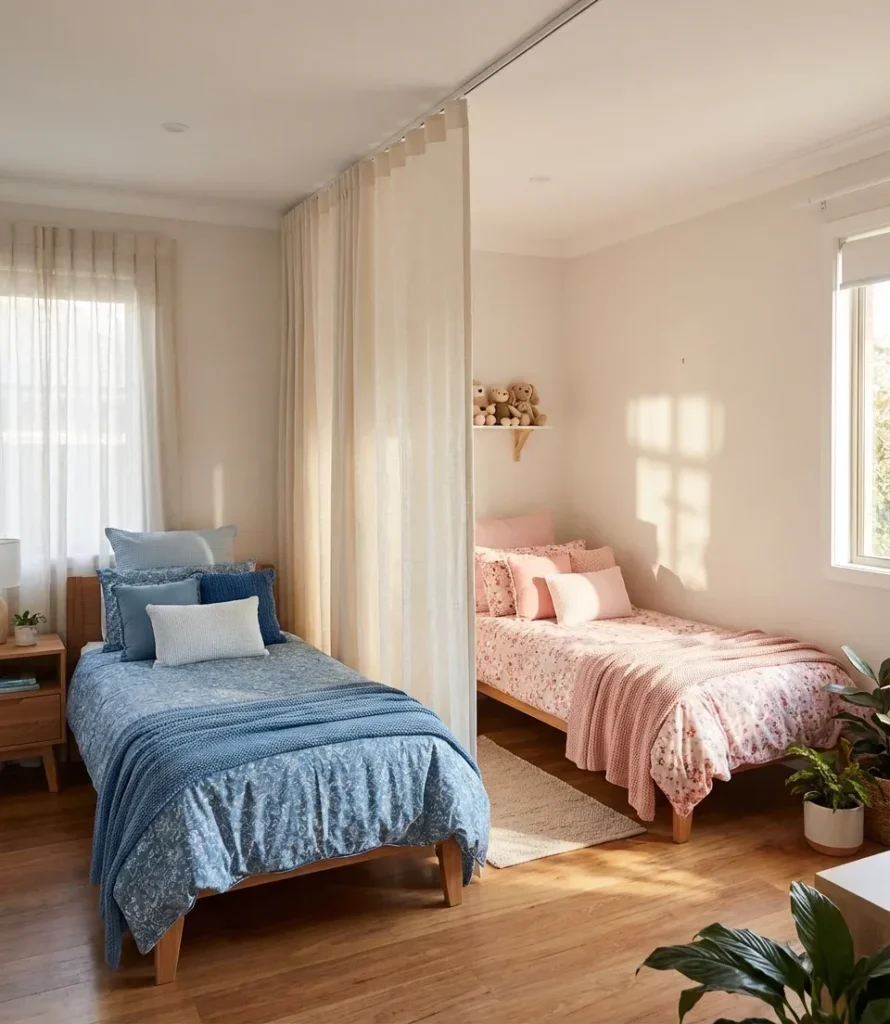
A simple curtain can completely change how a room feels, especially when you need gentle separation without building permanent walls. It brings a soft flow to the space, allowing light to pass through while still defining clear zones for rest, work, or relaxation. This is where everyday fabric becomes a thoughtful design choice that quietly reshapes the mood of your home.
From airy linen panels to richer, textured drapes, the choice of fabric sets the tone for the entire layout. A ceiling-mounted track or discreet rod keeps the look clean and intentional, while neutral shades create calm continuity and deeper tones add a sense of intimacy. Even subtle folds and pooling fabric at the floor can introduce a more curated, styled finish.
Beyond aesthetics, curtain dividers are incredibly practical for shared rooms, studio apartments, or multipurpose living areas. They offer privacy on demand, move with ease, and can be changed seasonally without effort or expense. It’s a flexible way to carve out personal corners that still feel open, warm, and connected.
6. Experiment with ideas to maximize function while making sure you maintain some level of privacy – enjoy the process!
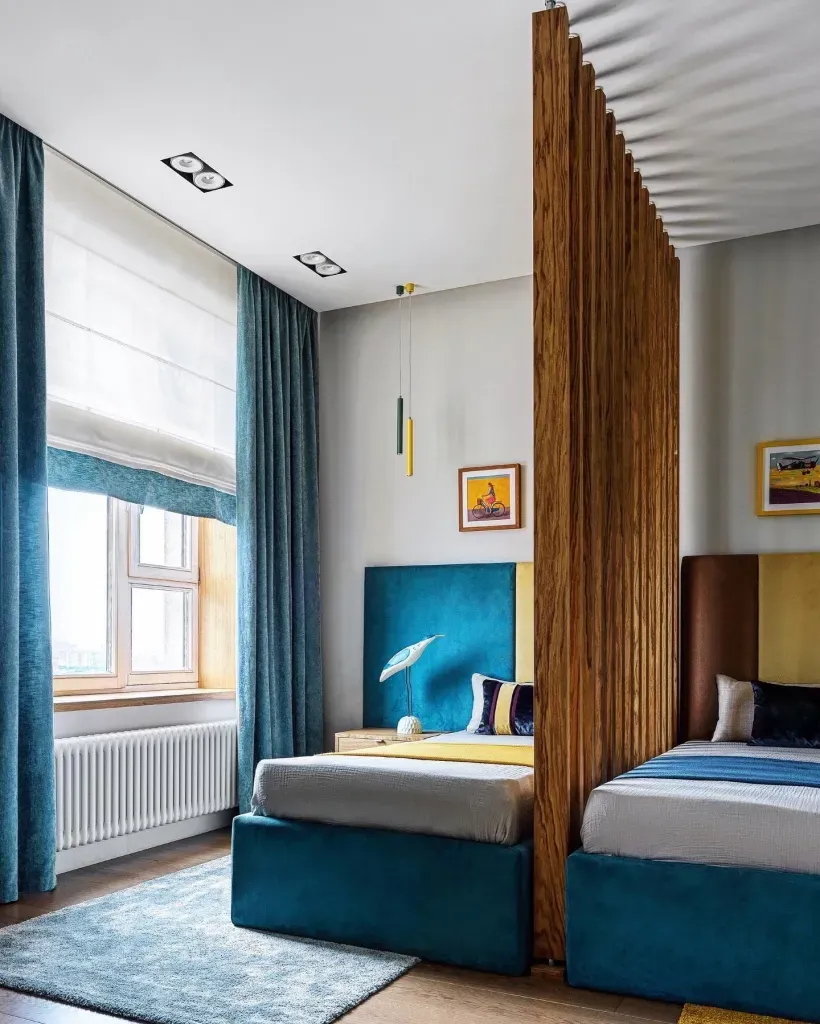
Designing a space where function and privacy work together is less about strict rules and more about thoughtful layering. This concept encourages you to rethink how each corner of a room can serve a purpose while still feeling personal and protected. Whether it’s a shared bedroom, studio, or multifunctional living area, the goal is to create comfort without losing individuality.
Start by exploring flexible layouts that allow movement while gently defining zones through furniture placement, curtains, or open shelving. Soft dividers, textured panels, and strategic spacing can help separate areas without making the room feel closed off. Every choice becomes part of a quiet balance between openness and personal retreat.
What makes this approach so rewarding is the freedom to adjust as your needs change over time. You’re not locking yourself into a rigid setup, but instead shaping a space that grows with daily routines and moods. The process feels intuitive, inviting you to experiment until the room feels naturally yours.
7. Nature-Inspired Relaxation with Neutral Zones
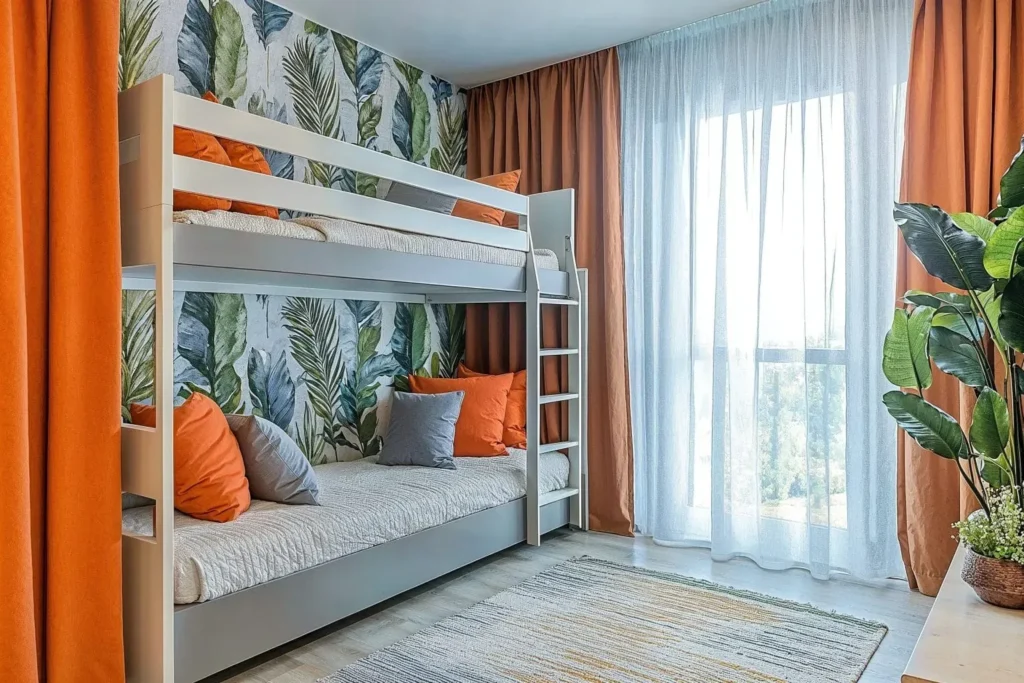
Soft, grounding, and quietly inviting, this design approach draws inspiration from nature’s most calming elements to create interiors that feel instantly at ease. “Nature-Inspired Relaxation with Neutral Zones” is all about spaces that breathe—where soft tones, organic textures, and gentle light work together without feeling forced. It’s the kind of atmosphere that feels lived-in, yet thoughtfully composed.
Within this style, every corner is shaped with intention through layered neutrals, warm woods, and tactile fabrics like linen and cotton. Subtle zoning plays a key role, using open shelving, low partitions, or shifts in texture to gently define areas without interrupting flow. Natural stone accents and soft matte finishes add quiet depth, keeping the overall mood calm but visually rich.
What makes this concept so compelling is the way it encourages stillness without feeling static, inviting you to slow down and settle in. Each zone offers its own rhythm—whether it’s a reading nook bathed in daylight or a soft seating area wrapped in muted tones. The result is a home that feels grounded, restorative, and effortlessly connected to the natural world around it.
Conclusion
What truly matters in creating a shared kids’ bedroom is not just the division of space, but the feeling of comfort, individuality, and calm each child carries within it. When you thoughtfully apply even a few of these ideas—whether it’s smart furniture placement, soft partitions, or personalized corners—you begin to notice how harmony naturally finds its place in the room. I always encourage you to observe how your children interact with their space and let that guide your styling choices rather than rushing the process. In your styling journey, remember that small, intentional changes can completely transform how a room is lived in every day. I would love for you to save or share these ideas so you can revisit them whenever inspiration strikes and continue shaping a home that feels beautifully balanced for everyone.